
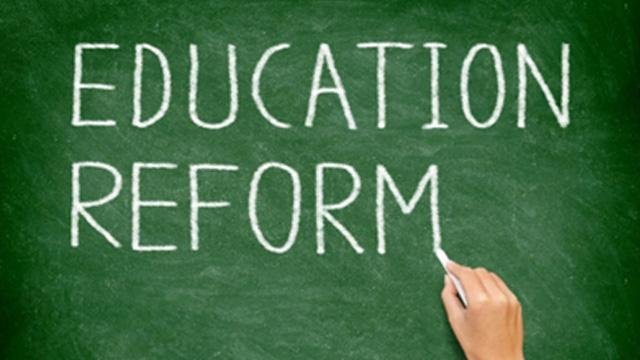
The solutions proposed by the new government regarding implementing reforms in Sri Lanka's education sector have now created a controversial situation. While all parties currently agree that the country needs education reform, various disagreements have emerged about how it should be implemented.
The general consensus is that the curriculum should be implemented with a vocational and technical background, examinations should be conducted accordingly, and the school system should operate in this manner. This is a solution that can achieve future goals in a developing world. New curricula are scheduled to be implemented for Grade 1 and Grade 6 starting from 2026.
Main Issues and Disagreements That Have Emerged
However, certain matters arising from the reforms have created problematic situations among many parties. Specifically, debates have emerged as a result of various issues including:
Changes in the curriculum
Extension of school hours
Introduction of modules
Sex education
A serious accusation leveled against the government concerns the removal or reduction of Buddhism and History subjects from schools and their replacement with LGBTQ ideologies. Critics point out that removing or reducing the subject of Buddhism, as well as making History an optional subject, could harm the moral character of future generations.
Responding to these accusations, the Ministry of Education has clarified that the Aesthetics and History subjects have not been removed from the new education reforms. However, critics point out that History is not available as an independent subject from Grade 1 to Grade 5, and instead "Global Citizenship Education" has been emphasized.
Sex Education - A Sensitive Matter
The issue of sex education provided to children has also received intense attention from many quarters. While it is extremely important to educate children about these matters in a health-conscious or scientific manner, the proper methodology for introducing these matters to children must be determined by education experts.
Providing sex education to children from a young age is a protective shield and tool that prevents them from becoming victims of abuse. Scholars engaged in various research on this matter demonstrate that providing sex education does not encourage children toward sexual activities, and that providing sex education from an early age can prevent many forms of abuse.
It is now a well-known fact that most abuse, crimes, and violence against children occur from family members, relatives, close friends, and neighbors. Therefore, they say that making children aware of such matters is an essential concern.
However, in the face of strong opposition from external parties, the direction of this could shift toward a different path. Meanwhile, it appears that the new education reform discourse is moving in another direction, highlighting unnecessary matters beyond the actual situation, and certain religious leaders and media seem to be contributing to this.
What happens in such a situation is that the education reforms genuinely proposed by the authorities get buried.
National Identity and Global Challenges
Sri Lanka is a multi-ethnic and multicultural country with a historical context. Accordingly, authorities must understand the need to implement new education reforms in a manner that does not create problems for that background and the country's identity. At the same time, we face a challenge as a country in moving forward with the world.
Looking back at history, Sri Lanka's education system has undergone numerous reforms since the 1970s. This was driven by objectives of expanding access, improving quality, and adapting to changing social needs. Initiatives such as the Mahapola Fund have played a crucial role in expanding access to higher education.
The 2026-2029 education reforms mark a decisive turning point in Sri Lanka's educational history. For these reforms to succeed, dialogue and consensus among all stakeholders - parents, teachers, students, religious leaders, and policymakers - are essential.
Education is not just about examination results, but about creating citizens who are moral, creative, and capable of logical thinking. It should aspire to prepare a generation that can face global competition while preserving national identity. Achieving this sensitive balance is crucial.
Comments (0)
Sign in to leave a comment
No comments yet. Be the first to comment!